Avocado Quality & Buyer Specification Guide
What the dry-matter maturity test actually measures, how UNECE and Tanzania's own national guideline grade and size avocados, what GlobalG.A.P and phytosanitary certification require for EU export, and how cold-chain handling prevents chilling injury in transit. Grading conventions here are industry-wide unless stated Tanzania-specific -- see our Tanzania avocado overview for origin, production and market context.

Harvest Seasonality
- Jan -- Outside main harvest
- Feb -- Outside main harvest
- Mar -- Peak harvest
- Apr -- Peak harvest
- May -- Peak harvest
- Jun -- Secondary harvest
- Jul -- Secondary harvest
- Aug -- Secondary harvest
- Sep -- Secondary harvest
- Oct -- Outside main harvest (current month)
- Nov -- Outside main harvest
- Dec -- Outside main harvest
Tanzania has at least two distinct avocado harvest windows that do not average into one national season: the Southern Highlands zone (Mbeya, Iringa, Rukwa, Njombe, Ruvuma -- Tanzania's main production belt) has its main harvest March-May and low season January-February; the Northern zone (Kilimanjaro/Arusha) has its main harvest June-September and low season December-January, per secondary trade coverage of TanTrade's Avocado Profile zone calendar. Fuerte specifically is reported with a wider February-September window. A separate 2026 trade-press account states a national "September to February" harvesting season without specifying variety or region -- we could not reconcile this with the zone-by-zone breakdown above, so peak/secondary reflect the more granular, region-attributed Southern/Northern split, and the single-sentence "Sept-Feb" claim is flagged as unreconciled rather than silently picked.
Sources: TanTrade Avocado Profile zone harvest calendar (via secondary trade coverage) ; Kilimo Kwanza, "Tanzania's Avocado Ascent: From Highlands to Global Markets" — last verified 8 October 2026
Varieties -- correcting a premise
Tanzania's export avocado sector is built mainly on Hass and Fuerte, with smaller volumes of Pinkerton also shipped to some markets (China has specifically approved Hass, Fuerte and Pinkerton for import). One academic source on the Southern Highlands trade puts the varietal mix at roughly 50% Fuerte, 30% Hass, with the remainder split across Pinkerton and ten-plus other named varieties (including X-Ikulu and Booth 7) grown mainly for the domestic market, which has a materially shorter shelf life when ripe and is not generally export-grade. We found no evidence that "Fuyu" is a documented Tanzania avocado variety -- Fuyu is a well-known persimmon cultivar name, not an avocado one, and no source we found uses it in an avocado context. If a brief or supplier references "Fuyu avocado," treat that as likely a mix-up with Fuerte (the real, widely-grown export variety) rather than a distinct cultivar, and verify directly with whoever used the term.
Sources: MDPI, "Avocado Production and Local Trade in the Southern Highlands of Tanzania"; Produce Report, "Tanzanian Avocado Exports to China Within Reach".
Dry matter -- the maturity standard that actually governs harvest timing
Unlike many fruits graded mainly on size and appearance, avocado harvest readiness is governed internationally by percent dry matter -- a lab/handheld-meter test that correlates with oil content and eating quality, measured by drying a sample of flesh to constant weight. Sources genuinely differ on the exact minimum by variety and market, and we report rather than average them:
| Source | Hass minimum | Fuerte / other minimum | Notes |
|---|---|---|---|
| Codex Standard CXS 197-1995 | 21% | 20% (Fuerte, Pinkerton, Edranol, Reed, Torres) | International baseline; other varieties may run lower still |
| California industry standard (1983-adopted) | 21.6% | Fuerte 19.9%, Pinkerton 23.0% | Slightly different figures from Codex for the same varieties -- not identical tables |
| Tanzania national guideline (Ministry of Agriculture) | ≥21%, export benchmark 21-23% | — | Aligns with Codex's Hass floor; the 21-23% is described as the practical export-harvest window |
| European importers/ripeners (practice, not a published standard) | ~23% reported as "ideal" | — | A commercial preference above the regulatory floor, not a separate codified minimum |
Sources: "Physiological Maturity and Percent Dry Matter of California Avocados"; Kilimo Kwanza, "Tanzania's avocado guideline signals a new era for high-value horticulture" (describing the Ministry's "Mwongozo wa Uendelezaji wa Tasnia ya Parachichi"); Codex Alimentarius, CXS 197-1995.
Size grading
The widely-cited international reference is UNECE Standard FFV-42 (concerning the marketing and commercial quality control of avocados), which sets size "codes" by weight band. We were not able to independently open UNECE's own PDF of the current (2023) edition (it returned an access error when fetched directly) -- the table below is reconstructed from secondary citations of that standard rather than read first-hand from the primary document, so treat exact boundary values as reported-not-independently-confirmed:
| Size code | Weight range (g) |
|---|---|
| 4 | 781-1220 |
| 6 | 576-780 |
| 8 | 456-576 |
| 10 | 364-462 |
| 12 | 300-371 |
| 14 | 258-313 |
| 16 | 227-274 |
| 18 | 203-243 |
| 20 | 184-217 |
| 22 | 165-196 |
| 24 | 151-175 |
| 26-30 | 123-157 (narrowing by code) |
| S (smallest) | Under 123 |
Tanzania's own national guideline reportedly defines 15 size categories spanning roughly 125g to over 1,220g, with export-grade thresholds by variety: Hass size codes 16-20 at a minimum ~80g, Fuerte size codes 14-16 at a minimum ~123g. These Tanzania-specific figures come from secondary coverage of the Ministry's guideline (we could not open the Ministry document itself), so cross-check the current primary guideline for a binding figure.
Sources: UNECE Standard FFV-42 (via secondary citation); Kilimo Kwanza, "Tanzania's avocado guideline signals a new era for high-value horticulture."
Grading classes & defect tolerances
UNECE FFV-42 defines three classes -- Extra, Class I, Class II -- with the two tiers we found concrete tolerance figures for working like this:
- Class I: up to 10% by number or weight may fail Class I but meet Class II; skin defects (corkiness, healed lenticels, non-progressive sunburn) tolerated up to a total area of 4cm², provided the flesh itself isn't affected.
- Class II: up to 10% by number or weight may fail even the minimum requirements, except decay, capped separately at 2%; skin-defect area tolerance widens to 6cm², same flesh-not-affected condition.
Tanzania separately recognises its own national standard, TZS 1704:2015(E), "Fresh avocado -- Specification," via the Tanzania Bureau of Standards (TBS), and a 2024-era regulatory update is reported to have introduced a three-tier commercial grading system -- described in one source as "Extra Class / Grade 1 / Grade 2" and in another as "Grade One / Grade Two / industrial grade." We could not access the primary TBS or Ministry document to confirm whether these are the same three tiers under two different names, or genuinely different category sets -- flagging this as an open gap rather than assuming they match the UNECE Extra/I/II scheme above.
Sources: The Citizen, "Tanzania tightens avocado trade rules to boost quality, curb buyer-farmer disputes"; UNECE Standard FFV-42 (via secondary citation).
Certification -- GlobalG.A.P and phytosanitary
GlobalG.A.P. certification is reported as effectively required for EU-bound Tanzanian avocado exports -- multiple exporter and industry sources describe it as the baseline good-agricultural-practice certification EU importers expect, alongside (separately) a phytosanitary certificate for each shipment. The Tanzania Horticultural Association (TAHA) is repeatedly named as the body that has trained large numbers of smallholder farmers toward GlobalG.A.P.-compliant practice and helped exporting companies obtain certification, while the Tanzania Plant Health and Pesticides Authority (TPHPA), under the Ministry of Agriculture, is named as the phytosanitary-certificate issuer. We did not find a single consolidated, Tanzania-government-published checklist tying these together into one official export procedure -- the picture above is assembled from several converging trade/industry sources rather than one primary document.
Sources: Kangero Farms, "GLOBALG.A.P. Certified Premium Avocado Export from Tanzania"; How We Made It In Africa, on TAHA's GlobalG.A.P. training role.
Packaging & cold chain
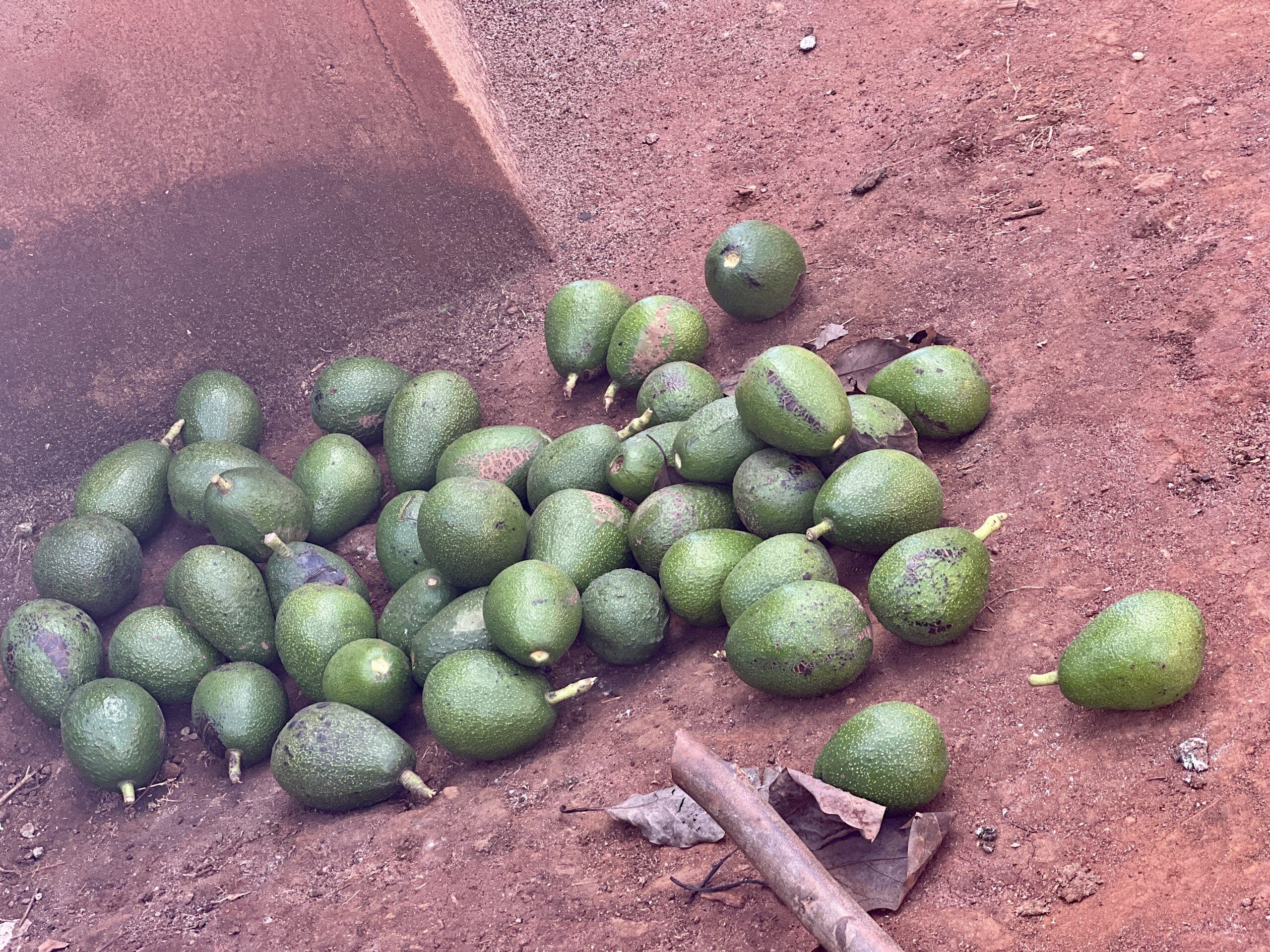
Avocados are chilling-sensitive -- cold-chain management is a real, buyer-relevant quality factor, not just a logistics footnote. Postharvest literature describes external chilling injury typically beginning below about 3°C, with symptoms (browned flesh, sunken black/brown skin spots, eventual breakdown around the stone) that can appear only after the fruit has left cold storage. Recommended carrying temperatures differ by variety: roughly 5-8°C for Fuerte/Hass versus a narrower 4.0-4.5°C for some other varieties (e.g. Booth 1, Lula) -- main varieties generally should not be held colder than about 5°C product temperature. A closed, unbroken cold chain is specifically flagged as important: any warming-and-recooling cycle in transit can accelerate ripening and cause condensation-related quality loss.
Export cartons are commonly cited at 4kg or 10kg net weight, loaded by size code (e.g. 4kg cartons at codes 12-24, 10kg cartons at the larger codes) -- this packaging convention is reported as general industry/export practice rather than confirmed as a Tanzania-mandated figure, so treat it as typical rather than regulatory.
Sources: UC Davis Postharvest Technology, Avocado produce facts; Cargo Handbook, "Avocados".
Tanzania-specific: production regions
Production is concentrated in the Southern Highlands -- Njombe (repeatedly described as the sector's epicentre, with cold-storage and buyer-hub investment reducing post-harvest losses), Iringa, Mbeya/Rungwe and Songwe -- with a separate, smaller Northern Zone centred on Kilimanjaro (Siha District). We found Mafinga (in Iringa region) referenced in the brief for this page but not specifically named as a production centre in the sources we checked; it sits within the broader Iringa highlands area that is named.
Sources: Kilimo Kwanza, "Tanzania's Avocado Ascent"; How We Made It In Africa.
Export growth and destination markets
Export-volume and value figures for Tanzanian avocado vary meaningfully between sources even for overlapping years -- we report them as published rather than reconcile them into one series:
| Source | Figures reported |
|---|---|
| The Citizen (2026), citing government figures | 2020/21: 15,433t / $44.2M → 2025/26: 52,000t / $97.2M (a national 40,000t-by-2030 target reported as already exceeded) |
| IPPmedia / FreshPlaza (2025), citing a different base year | 2021: 15,432t → 2023: 26,826t (reported as a "74% increase") |
| TanzaniaInvest (2024) | 2024: 32,954t valued at $49.8M |
| Kilimo Kwanza, "Avocado Ascent" | 2014: 1,877t/$2M → 2019: 9,000t/$12M → 2021: 11,237t/$33M → 2023: ~25,000t/$50M+ (estimated), projecting 143,000t by 2026 |
Every source agrees on the broad direction -- strong, multi-year export growth -- but the specific tonnage for the same year (e.g. 2021: 15,433t vs. 11,237t across two sources above) genuinely differs, likely reflecting different data cuts (calendar vs. marketing year, provisional vs. final government figures, or different reporting bodies). Europe is consistently reported as the dominant destination, cited at roughly 73-85% of exports (France, Netherlands, UK named specifically), with India, the UAE and -- since roughly 2022 -- China named as the next tier of markets, and some 2026-era reporting mentioning bilateral market-access talks with South Africa.
Sources as named in the table; The Citizen, "Government: Avocado export earnings more than double in five years"; IPPmedia, "Avocado exports surge by 74pc over four years"; TanzaniaInvest, "Tanzania Avocado Production and Exports".
Export documentation & HS code
Fresh avocados are classified under HS 0804.40 ("avocados, fresh or dried") -- the generic global heading; we did not find a Tanzania-specific subheading distinct from this. Required export documentation named across multiple trade-advisory sources includes a phytosanitary certificate (TPHPA/Ministry of Agriculture), GlobalG.A.P. certification for EU-bound shipments (see above), commercial invoice, packing list, bill of lading and certificate of origin -- assembled from converging trade-advisory sources rather than one single consolidated government manual, consistent with how we source the equivalent list for cashew and vanilla elsewhere on this site.
Sources: HS code references for avocado; TAHA/TPHPA role per trade-advisory convergence as cited above.
Buyer specification checklist
Worth putting in an RFQ or purchase order, whether or not every field applies to your order:
- Variety -- Hass, Fuerte or Pinkerton for export; confirm the supplier isn't offering a domestic-market-only local variety under a different name.
- Dry matter % -- state your minimum explicitly (21% Codex floor vs. 23% EU-practice preference are genuinely different asks) and which test method/meter basis you expect.
- Size code & weight band -- per UNECE FFV-42 or Tanzania's own 15-category scale; specify which.
- Grade/class -- Extra/Class I/Class II (UNECE) or Tanzania's own grading tier -- confirm which scheme your counterpart is quoting against, see the open gap flagged above.
- Defect tolerance -- skin-defect area, decay %, bruising -- per the class tolerances above.
- Certification -- GlobalG.A.P. certificate number and issuing body if EU-bound; organic or fair-trade if applicable.
- Packaging & cold chain -- carton weight/size code, and confirmed transport temperature range (don't assume a single figure covers all varieties, see above).
- Testing requirements -- certificate of analysis, third-party inspection, or buyer's own incoming check.
- Destination & Incoterm -- see our Incoterms for Commodity Buyers guide.
Sample & inspection guidance
- Appearance -- skin colour/texture appropriate to variety and ripeness stage, free of progressive sunburn or corkiness beyond the class tolerance.
- Firmness -- a visual/firmness check at receiving is a ripeness indicator, not a substitute for a dry-matter reading taken at harvest -- by the time fruit is soft, maturity testing is no longer meaningful.
- Bruising -- press gently near the stem end and shoulders, common impact-damage points in transit; internal bruising may not show externally until the fruit ripens further.
- Stem/calyx condition -- an intact, not-sunken stem scar and firm calyx are generally good signs; a loose or missing stem can be an entry point for decay.
- Packaging & temperature log -- check the carton for condensation (a cold-chain break indicator) and request the shipment's temperature-logger data if a break is suspected.
A visual/firmness sample check is a screening step, not a substitute for laboratory dry-matter testing at harvest -- by the time fruit reaches a buyer, maturity can no longer be verified by inspection; it has to be confirmed by the exporter's own harvest-stage records. Our general Quality Inspection & Pre-Shipment Verification guide covers the wider pre-shipment inspection process that applies across commodities, including avocado.
Full Tanzania avocado profile
Origins, production regions, varietal mix, and market/trade data with sources.
Read the full profile →Suppliers

AMIS Business Solution Ltd (AMIS Fresh)
Avocado (Hass/Fuerte), mango, passion fruit, pineapple, green bean and snow pea exporter. 500+ hectare avocado plantation…

Seasons Orchards Ltd
Hass/Fuerte avocado grower-exporter, est. 2016, HQ Nairobi (Kenya) with 185 hectares and farming/packing operations in Njombe,…

Tanzanice Agrofoods Ltd
Avocado exporter, est. 2017 (operations from 2012/2015), majority Finnish-owned. 300+ individually GlobalG.A.P.-certified contract farmers in the…
Rungwe Avocado Company (RAC)
Commercial Hass avocado grower/exporter in Rungwe/Busokelo districts, Mbeya; first EU air-freight export trial 2009. Runs an…
Africado Ltd
Commercial Hass avocado grower/exporter in Siha District, Kilimanjaro region, est. 2007. Operates Kifufu and Gararagua farms…
Lupembe Avocado Farm Ltd
300-acre organic avocado farm in Njombe, GLOBALG.A.P./GRASP/SMETA certified (Certificate No. 10000429406); engages 300+ smallholder out-growers across…
Last reviewed 8 October 2026. Sources cited inline above; see also Data Sources and Methodology for how we handle disagreeing figures and unverifiable claims.