Tanzania Avocado: Sourcing Guide
Overview
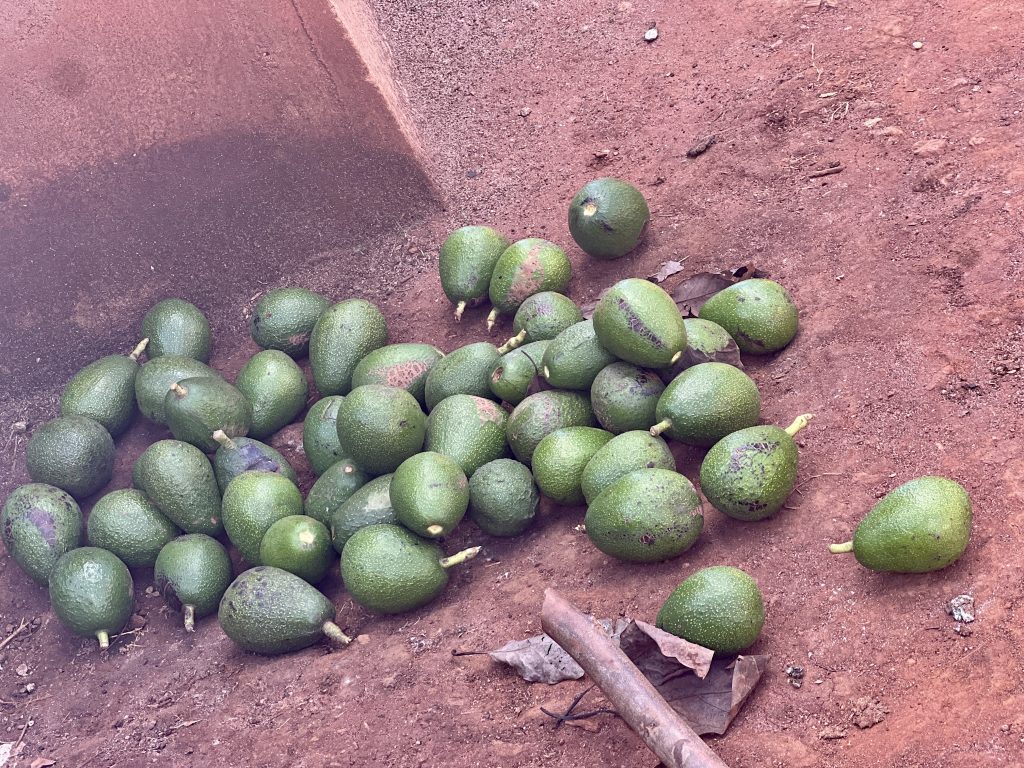
Tanzania’s avocado export industry is centred on Hass variety fruit grown in the Southern Highlands (Njombe, Mbeya/Rungwe-Busokelo, Iringa, Songwe, Rukwa, Ruvuma) and in the Kilimanjaro/Siha area in the north. Fuerte and other local varieties are grown mainly for the domestic market. Roughly 90% of national production comes from smallholders, commonly organised through out-grower schemes run by commercial estates. Tanzania is Africa’s third-largest avocado producer, after South Africa and Kenya, and — while still much smaller in scale than Kenya — one of the continent’s fastest-growing exporters.
Production
National production has been reported at 190,000 tonnes (2018, FAO/TAHA), 149,340 tonnes (2020/21), 201,354 tonnes (2024/25) and 203,473 tonnes (2025/26, government figure) — a 36% rise over the five seasons from 2020/21 to 2025/26. A separate, methodologically distinct figure exists for a nearby season: the NBS/OCGS Annual Agricultural Sample Survey (a household- and farm-level survey instrument, not an administrative estimate) reports national avocado production of just 38,352 tonnes for 2023/24 — roughly a fifth of the administrative figure for the adjacent season. The gap is large enough, and the instruments different enough, that neither figure should be read as having superseded the other. Three different official-sounding national targets circulate in the press for different years (290,000t “by 2025”, 250,000t “by 2030”, 235,000t “by 2026/27”) that cannot all be correct simultaneously; none is presented here as the single authoritative goal.
Export & Trade
Export volumes have grown roughly nine-fold since the mid-2010s, though individual-year figures vary meaningfully between sources: 1,877 tonnes/$2M (2014) rising to a government-reported 15,433 tonnes/$44.2M (2020/21), 26,826 tonnes/$77.3M (2022/23, the most consistently corroborated figure in this series across three independent outlets), and 35,627 tonnes (2023/24, +33% year-on-year). The most recent, 2025/26 season is reported two different ways by sources published only weeks apart: a government announcement of 52,000 tonnes/$97.2M (said to beat the 40,000-tonne 2030 target five years early), versus a trade-press figure of 37,871 tonnes, described as 94.7% of that same 40,000-tonne target — i.e. not yet reached. Neither figure is treated as settled here.
Europe (Netherlands, France, Germany, UK) remains the dominant export destination, with the Netherlands acting as the main EU redistribution hub. Newer markets include China (first shipment reported by FAO in November 2024, though a separate source describes Asia expansion “since 2022”), India (first consignment shipped by Westfalia Fruit), the UAE and South Africa.
Within Africa, Kenya was long the continent’s dominant avocado exporter, but Morocco overtook Kenya as Africa’s top exporter in 2025 (roughly 141,000 tonnes versus Kenya’s 105,164 tonnes, the latter down 19% year-on-year amid Red Sea shipping disruption and a domestic sea-freight restriction). Tanzania remains considerably smaller than either, but is growing from a much lower base.
Quality & Export Standards
EU-bound fruit must meet UNECE size and defect-tolerance grading (Class I/II) and a minimum dry-matter content for maturity — reported inconsistently even within the same trade body’s own publications as 22-23% or 23.5%, so treated here as “roughly 22-24%” rather than one precise figure. GlobalG.A.P. certification functions as a de facto requirement for EU buyers, with some buyers additionally requesting GLOBALG.A.P. SPRING, Rainforest Alliance, or social-compliance add-ons (GRASP, SMETA, amfori BSCI). A phytosanitary certificate confirming freedom from EU-regulated quarantine pests is required under EU Regulation 2019/2072. The dry-matter requirement is not just a paperwork formality: an agricultural extension specialist reported at Tanzania’s September 2026 Nane Nane farmers’ fair that growers routinely harvest too early because they had “never heard of measuring dry matter,” producing watery, flavourless fruit and lower prices — a concrete illustration of why the standard matters, not only what it is. Domestically, Tanzania’s regulator, COPRA (Cereals and Other Produce Regulatory Authority), introduced a grading system in 2025 (Grade One, Grade Two, industrial grade) alongside buyer/agent licensing and digital farm registration, reporting 8,781 registered farms.
Growers & Investment
Commercial out-grower operators anchor much of the export supply chain: Rungwe Avocado Company (Mbeya, AgDevCo-backed, 3,000+ out-growers), Africado Ltd (Kilimanjaro/Siha, Finnfund-backed, est. 2007), Lupembe Avocado Farm Ltd (Njombe, GLOBALG.A.P./GRASP/SMETA certified, 300+ out-growers) and Kostiv Tanzania Group Ltd (Njombe, a reported TZS 3 billion+ regional investment that also self-funded a public access road). Other verified exporters include Tanzanice Agrofoods Ltd (Dar es Salaam-HQ’d, majority Finnish-owned, 300+ GlobalG.A.P.-certified contract farmers), AMIS Business Solution Ltd/AMIS Fresh (500+ ha across Njombe, Iringa, Songwe and Kagera) and Seasons Orchards Ltd (Kenya-HQ’d, 185 ha of Tanzania farming/packing operations in Njombe). Tanzania’s Plant Health and Pesticides Authority (TPHPA) named 16 companies cleared by China’s GACC to export avocados in 2024-25, most not independently verified beyond that one official announcement. The Tanzania Horticultural Association (TAHA) runs Swedish-SIDA-funded collection hubs in Njombe through its certification arm Greencert and logistics arm TahaFresh, reporting 6,000+ GAP-certified farmers and multiple processing facilities built via public-private partnership. A second, avocado-specific body, the Avocado Society of Tanzania (ASTA), was registered in May 2022 (HQ Njombe, 273 founding members) and is distinct from TAHA’s wider horticulture remit.
Growing Season
Harvest timing varies by variety and zone: Hass runs March-May in the Southern Highlands and June-September in the northern zone; Fuerte runs February-September. The Southern Highlands zone’s main harvest is March-May, with a low season in January-February.
Recent Developments (2026)
COPRA introduced a “floor, not fixed price” mechanism for the 2026/27 buying season (announced October 2026), intended to guarantee growers a minimum price without capping what buyers can offer above it — reported by Kilimo Kwanza but not yet independently cross-checked against a second source or an actual floor price figure.
Current Market
Tanzania
| Market | Type | Grade | Price | Observed | Source |
|---|---|---|---|---|---|
| Tanzania Hass avocado farm-gate price (export-grade) | Farm gate | Hass | USD 0.65/kg | 17 Apr 2025 | Kilimo Kwanza |
| Tanzania local-variety avocado farm-gate price (domestic market) | Farm gate | Fuerte / local varieties | USD 0.38/kg | 17 Apr 2025 | Kilimo Kwanza |
Production & Trade
| Category | Value | Period | Geography | Source |
|---|---|---|---|---|
| Export Value | 97,200,000 USD | 2025/26 | Tanzania | The Citizen (Tanzania) |
| Export Value | 77,300,000 USD | 2022/23 | Tanzania | FAO |
| Export Value | 33,000,000 USD | 2021 | Tanzania | Kilimo Kwanza |
| Export Value | 44,200,000 USD | 2020/21 | Tanzania | The Citizen (Tanzania) |
| Export Value | 7,700,000 USD | 2020 | Tanzania | Kilimo Kwanza |
| Export Value | 12,000,000 USD | 2019 | Tanzania | Kilimo Kwanza |
| Export Value | 2,000,000 USD | 2018 | Tanzania | Kilimo Kwanza |
| Export Value | 2,000,000 USD | 2014 | Tanzania | Kilimo Kwanza |
Figures from different sources sometimes disagree (e.g. sector-body press statements vs. customs trade data) — where that happens we show both, tagged by source, rather than silently picking one. See Data Sources.
Suppliers
7 publicly-sourced suppliers for this commodity — producers, processors, exporters and cooperatives.

AMIS Business Solution Ltd (AMIS Fresh)
Avocado (Hass/Fuerte), mango, passion fruit, pineapple, green bean and snow pea exporter. 500+ hectare avocado plantation…

Seasons Orchards Ltd
Hass/Fuerte avocado grower-exporter, est. 2016, HQ Nairobi (Kenya) with 185 hectares and farming/packing operations in Njombe,…

Tanzanice Agrofoods Ltd
Avocado exporter, est. 2017 (operations from 2012/2015), majority Finnish-owned. 300+ individually GlobalG.A.P.-certified contract farmers in the…
Rungwe Avocado Company (RAC)
Commercial Hass avocado grower/exporter in Rungwe/Busokelo districts, Mbeya; first EU air-freight export trial 2009. Runs an…
Africado Ltd
Commercial Hass avocado grower/exporter in Siha District, Kilimanjaro region, est. 2007. Operates Kifufu and Gararagua farms…
Lupembe Avocado Farm Ltd
300-acre organic avocado farm in Njombe, GLOBALG.A.P./GRASP/SMETA certified (Certificate No. 10000429406); engages 300+ smallholder out-growers across…
Kostiv Tanzania Group Ltd
Arusha-based agribusiness operating a 600-acre avocado orchard in Njombe (Nundu/Limage villages); reported >TZS 3 billion regional…
Tanzania Commodities Marketplace — Buy & Sell Avocado
Verified seller companies, buying requirements and direct quotations for Avocado — powered by the network's shared B2B marketplace.
Available Offers
No active Avocado offers are currently published.
Are you a Tanzanian Avocado supplier? List your product.
Buyer Requirements
No open Avocado buying requirements right now.
Looking to buy? Post a buying requirement.
- CBI (Netherlands) Entering the European market for avocados PDF; CBI European market potential for avocados webpage; FAO OCOP initiative coverage 2025; The Citizen (Tanzania) 2026; Kilimo Kwanza 2025-2026 (Avocado Ascent; 8 collection centres to 15 export markets); FreshPlaza 2025-2026; Rungwe Avocado Company; Finnfund (Africado); Lupembe Avocado Farm; The Citizen (Kostiv investment, 2025)